Πηγή: http://www.polemikes-tehnes.gr/articles/286/Ατέμι-Ουάζα,-μια-άλλη-προσέγγιση
O όρος ατέμι-ουάζα αποτελείται από τις λέξεις άτε που σημαίνει κτύπημα
μι που σημαίνει σώμα και ουάζα που σημαίνει τεχνικές.Δηλαδή υποδηλώνει
τις τεχνικές εκείνες με τις οποίες επιφέρουμε κτύπημα στο σώμα του
αντιπάλου.
Στις παραδοσιακές ιαπωνικές πολεμικές τέχνες θα
παρατηρήσουμε ότι δίδεται μεγαλύτερη έμφαση στις λαβες και λιγότερη
έμφαση στα κτυπήματα.
Αυτό οφείλεται για δυο κυρίως λόγους. Πρώτον
διότι σε μια αντιπαράθεση οι αντίπαλοι φέρουν όπλα και ως εκ τούτου τα
«κτυπήματα » είναι με τα όπλα και όχι με τα χέρια η τα πόδια και
δεύτερον διότι όταν λόγω απόστασης η χρήση των όπλων καθίσταται δύσκολη
πρωταρχικός σκοπός του πολεμιστή ήταν να ρίξει τον αντίπαλο στο έδαφος
και έτσι να τον ελέγξει με να τον δέσει (χομπάκου) η να τον αποτελειώσει
.
Το Γιορόι κούμι-ούτσι ήταν ακριβώς η μέθοδος με την οποία
πολεμιστές που φορούσαν πανοπλία όταν ερχόντουσαν σε κοντινή απόσταση με
τον αντίπαλο χρησιμοποιούσαν τεχνικές να ρίξουν τον αντίπαλο στο έδαφος
καθότι οι τεχνικές ατέμι ήταν αναποτελεσματικές εναντίον σε κάποιον
που φορούσε πανοπλία.
Το Γιορόι κούμι-ούτσι είναι ο πρόγονος του Ζίου Ζίτσου.
Οι
τεχνικές ατέμι άρχισαν να χρησιμοποιούνται πιο πολύ την περίοδο Έντο
(1603-1868) όταν οι πανοπλίες έπαψαν να χρησιμοποιούνται και οι μέθοδοι
αποκαλούνται Χέιφουκου κούμι-ούτσι, που αναφέρονται σε τεχνικές όταν οι
αντίπαλοι δεν φορούσαν πανοπλία.
Και εκεί όμως τα ατέμι έχουν
δευτερεύουσα σημασία διότι οι πολεμιστές ήταν σπάνια άοπλοι και ως εκ
τούτου προτεραιότητα όταν κάποιος αντιμετώπιζε κάποιο αντίπαλο που είχε
σπαθί ήταν να τον αποτρέψει από το να μπορέσει να το τραβήξει.
Την
περίοδο Έντο ορισμένες σχολές Ζίου Ζίτσου χρησιμοποίησαν μικρά όπλα για
να κάνουν τις τεχνικές ατέμι πιο αποτελεσματικές. Τα όπλα αυτά
αποκαλούνται κομπούκι(μικρά όπλα), κακουσιμπούκι( κρυφά όπλα ) η
χιμπούκι(μυστικά όπλα).
Είναι γεγονός ότι τα ατέμι-ουάζα είναι
στενά συνυφασμένα με τα κιούσο δηλαδή τα ανατομικά ευαίσθητα σημεία
του ανθρωπίνου σώματος. Παρόλο ότι τα ευαίσθητα σημεία του ανθρωπίνου
σώματος είναι δεδομένα η κάθε σχολή εστιάζεται σε αυτά τα οποία θεωρεί
πιο αποτελεσματικά η πιο χρήσιμα για συγκεκριμένες τεχνικές η και
καταστάσεις που πιθανόν να χρησιμοποιηθούν. Συνήθως τελικός στόχος είναι
να τεθεί ο αντίπαλος εκτός μάχης και έτσι να μην αποτελεί κίνδυνο για
τον αμυνόμενο. Στην σύγχρονη εποχή η θεώρηση αυτή παρόλο ότι είναι
πρακτικά αποτελεσματική εγκυμονεί κινδύνους για τον αμυνόμενο, αν ο
επιτιθέμενος τραυματιστεί σοβαρά γεγονός που θα έχει νομικές συνέπειες
για τον αμυνόμενο.
Γεννάται λοιπόν το ερώτημα αν υπάρχουν κιούσο
τα οποία είναι αποτελεσματικά αλλά και συγχρόνως μειώνουν τους
κίνδυνους να τραυματιστεί υπέρ το δέον ο επιτιθέμενος.
Στον
Κινεζικό βελονισμό κατά μήκος των μεσημβρινών έχουμε σημεία τα οποία
πέραν από σημεία θεραπείας μπορεί να χρησιμεύσουν και σαν σημεία για
εφαρμογή στην αυτοάμυνα. Επίσης το ιαπωνικό σιάτσου που βασίζεται στην
ίδια θεωρία των μεσημβρινών (κιράκου) έχουνε τα ευαίσθητα σημεία
τσούμπο τα οποία πέραν των θεραπευτικών ιδιοτήτων τους χρησιμεύουν και
σαν σημεία πιέσεων για λόγους αυτοάμυνας.
Τα ατέμι-ουάζα που
ακολουθούν αυτή την προσέγγιση δεν είναι τόσο κτυπήματα όσο πιέσεις στα
συγκεκριμένα σημεία και επειδή δεν έχουν σαν στόχο να τραυματίσουν
σοβαρά τον αντίπαλο θεωρούνται σαν «μαλακά» ατέμι. Την ανωτέρω θεώρηση
ως προς τα ατέμι-ουάζα ακολουθεί και το Χάκκο Ρίου Ζίου Ζίτσου του
Οκουγιάμα Ριούχο.
Ανάλογη προσέγγιση συναντάμε και στις μοντέρνες «πολεμικές τέχνες » της Δύσης.
Οι
τακτικές ελέγχου με πίεση σημείων (pressure point control tactics η
PPCT ) είναι μια μέθοδος που χρησιμοποιείται από αστυνομικές δυνάμεις
ορισμένων χωρών στα πλαίσια των αμυντικών τακτικών τους, που έχουν σαν
στόχο να ελέγξουν αυτόν που πρέπει να συλλάβουν ,εφόσον αντιστέκεται,
χωρίς να τον τραυματίσουν σοβαρά.
Τα σημεία χωρίζονται σε δυο
κατηγορίες . Η πρώτη κατηγορία αφορά τα σημεία πίεσης νεύρων του λαιμού
και του κεφαλιού, αυτά είναι σημεία πλησίον της επιφάνειας του δέρματος
και χρησιμοποιούνται για να ελέγξουν τον αντίπαλο μέσω του πόνου (pain
compliance).
Η δεύτερη κατηγορία αφορά σημεία που αποκαλούνται
νεύρα « μηχανικών σημείων» ( nerve “motor points” ). Αυτά τα σημεία
χρησιμοποιούνται σαν σημεία κτυπήματος με κλομπ όπου ο τραυματισμός
περιορίζεται στην μυϊκή μάζα του σημείου. Συγχρόνως όμως υπάρχει
αδυναμία χρήσης του μέλους που κτυπήθηκε για 30 δευτερόλεπτα έως μερικά
λεπτά.
Όπως στο Ζίου Ζίτσου της περιόδου Έντο χρησιμοποιούσαν
μικρά όπλα για να γίνουν πιο αποτελεσματικά τα ατέμι έτσι και στην
σύγχρονη εποχή έχουμε «όπλα» που είναι νόμιμα και επιτρέπουν να κάνουμε
τα «μαλακά» ατέμι πιο αποτελεσματικά πετυχαίνοντας πολύ καλύτερη
διείσδυση στα σημεία των νεύρων από ότι θα μπορούσαμε να πετύχουμε με
γυμνά χέρια.
Ένα τέτοιο «όπλο» είναι και το Κούμποταν(φωτογραφία
του άρθρου) που έκανε δημοφιλές ο δάσκαλος του καράτε Τακαγιούκι
Κουμπότα παρόλο ότι προέρχεται από το σουντέτσου το οποίο ήταν ιδανικό
για ατέμι-ουάζα. To σουντέτσου ήταν ένα από τα κρυφά όπλα, η μυστικά
όπλα του Ιαπωνικού Ζίου Ζίτσου της περιόδου Έντο.
Το “κούμποταν” αποκαλείται και «ράβδος πειθούς» persuador baton.
Πιστεύω
ότι όσοι ασχολούνται με τις πολεμικές τέχνες η την αυτοάμυνα θα πρέπει
να εξετάσουν και την εξάσκηση στο “ κούμποταν ” σαν μια προσθήκη στις
τεχνικές αυτοάμυνας που ήδη εξασκούν ,που μπορεί να βοηθήσει στην
αυτοάμυνα και στον έλεγχο του αντιπάλου χωρίς να τον τραυματίσει.
Μιχαήλ Δ. Πετρόπουλος
Βιβλιογραφία
1) Classical fighting arts of Japan (a complete guide to koryu Jujutsu) του Serge Mol εκδόσεις Kodansha
2) Defensive Tactics student manual εκδόσεις PPCT management Systems,Inc.
3) Official Kubotan Techniques του Takayuki Kubota και John Peters , Jr.εκδόσεις Kubotan Institute.
4) Tactical edge του Charles Remsberg εκδόσεις Calibre press.
Εμφάνιση αναρτήσεων με ετικέτα Daito-Ryu Aikijujutsu. Εμφάνιση όλων των αναρτήσεων
Εμφάνιση αναρτήσεων με ετικέτα Daito-Ryu Aikijujutsu. Εμφάνιση όλων των αναρτήσεων
Τρίτη 25 Οκτωβρίου 2016


Σάββατο 26 Δεκεμβρίου 2015
Aikido glossary
Aikido:
(ai: harmony; ki: spirit, energy; do: way, path, method)
Ai-hanmi:
(ai: same; han: half; mi: body) Uke and nage stand facing each other
with the same foot forward: right/right or left/left.)
Anza:
(the lotus position)
Ashi:
(foot or leg)
Atama:
(head)
Atemi:
(ate: to strike; mi: body) A strike or blow used during a technique,
directed toward the vulnerable parts of the body.
Awase:
(awase: to harmonize) To coordinate and fit your movements to the
movements of the attacker.
Bokken/bokuto:
(bo/bok-: wooden; ken/to: sword) Wooden sword.
Budo:
(bu: martial; do: way,path, method) The Way of the Warrior. Martial
arts including fighting techniques,strategy, physical and spiritual
training, mental discipline and etiquette.
Bukiwaza:
(buki: weapons; waza: technique) Weapons techniques.
Chudan:
(chu: middle; dan: level)
Dan:
(dan: level, grade) black belt level.
Shodan:
(sho: first) First dan.
Nidan:
Second dan.
Sandan:
Third dan.
Yondan/Yodan:
Fourth dan.
Deshi:
(de: youngerbrother; shi: child) A student training under a master.
Do:
(way, path, method)
Dojo:
(do: way; jo: place) Place for training.
Domo
Arigato Gozaimasu/gozaimashita: Most polite form of thanks in
present tense, past tense.
Dori/Tori:
(grab/ grasp)
Dozo:
(please, go ahead, begin)
Eri:
(collar)
Furikaburu:
(furi:to raise a weapon over the head; kaburu: to carry on or
over the head) The movement of raising a ken or jo over the head to
the position used for a downward strike.
Futari-dori:
(futari: two people; dori: hold, grasp) Two people holding nage.
Gaeshi/Kaeshi:
(turn, reverse)
Gedan:
(ge: lower; dan: level)
Gi:
(gi: clothes) In Japanese most often called dogi (do: way) or keikogi
(keiko: training) A training outfit for martial arts.
Gyaku-hanmi:
(gyaku: opposite; han: half; mi: body) Uke and nage stand facing
each other with the
opposite
foot forward: right/left or left/right.
Ha:
The edge of a sword
Hai:
(hai: yes)
Hajime:
(command) Begin.
Hakama:
Traditional Japanese pleated, skirt-like wide trousers. Worn by 1
dan holders; or from 3rd kyu.
Hanmi:
(han: half; mi: body) Aikido stance in which the front foot is
pointing straight forward and the rear foot is at an approximate 90
degree angle as in an upside-down T-shape. The same hip as the front
foot and upper body are turned slightly sidewise to make the body a
smaller target.
Hanmi-handachi:
(han: half; mi: body; han: half; dachi: standing) Uke is standing
and nage is sitting (in seiza).
Hantai:
(opposite)
Happo-giri:
(ha-: eight; po: direction; giri: cut) Eight directional cut with
the sword/bokken.
Hara:
(stomach) The lower region of the abdomen- the physical and
spiritual center of youself. The point in which you focus and center
your balance and awareness.
Hayagaeshi: (haya:
quick; gaeshi: turn) The turning movement usually from Tsuki No Kame
and directly into yokomen uchi without stopping for the blocking
position which is part of this transitional movement.
Henka-waza:
(henka: variation; waza: technique) Variation of a basic
technique.
Hidari:
left
Hiji:
elbow
Hito-e-mi:
(hito: one; e: Japanese counting prefix; mi: body) An Aikido stance
resembling hanmi but with the hips pulled further back to the side.
Used in irimi-nage for instance.
Hiza:
knee
Ho:
(1): direction
(2): method
Iie:
(iie: no)
Irimi:
(iri: entrance, enter; mi: body) Techniques in which nage places
him/herself behind uke.
Jiyu-waza:
(jiyu: free; waza: technique) Type of practice where nage
improvises, freely choosing the techniques to be used.
Jo:
(jo: staff) Wooden staff, usually approximately 1 1/2 meters
long.
Jodan:
(jo: upper; dan: level)
Jo-dori:
(jo: staff; dori: grab, grasp) Techniques used to take the
attacker’s (uchi’s) jo. Approximately 10 variations.
Juken:
(ju: gun; ken: sword) Rifle with bayonet.
Kaicho:
(kai: organization; cho: leader)
Kaiso:
(kaiso: founder of a style) Term used for O-sensei Ueshiba.
Kaiten:
(rotate, turn)
Kaeshi-waza:
(kaeshi: reverse, return; waza: technique) Counter technique.
Kamae:
( kamae: stance) Aikido stance, encompassing an attitude of
hightened mental awareness and readiness to unleash techniques.
Kakari-geiko:
(kakari: to attack or swarm over; geiko/keiko: practice) Attackers
(uke) in a row attack one after the other.
Kansetsu:
(joint)
Kao:
(face)
Karada:
(body)
Kata:
(1) Shoulder
(2) Predetermined
sequence of movements. Used to learn techniques and principles in
Aikido weapons practice
Katana:
Japanese sword.
Katate:
(kata: one; te: hand) One-handed grab.
Katame-waza:
(katame: to hold or pin; waza: technique) Techniques ending in a
hold.
Keiko:
( actual meaning: to study old things) Training/ practice.
Ken:
Japanese sword.
Ken-tai-jo:
( ken: sword; tai: against; jo: staff) A series of weapon
techniques using the jo to defend against a sword/bokken.
Ki:
( ki: energy, spirit, intention) The vital life-force of the
body.
Kiai:
(ki: energy,spirit, intention; ai: harmony) A powerful yell or shout
originating from the pit of the abdomen, used to unleash physical
and spiritual energy from the body.
Kihon:
(ki: important, valuable; hon: basic) Basic techniques.
Ki-musubi:
( ki: energy, spirit, intention; musubi: to tie together, to
bind) The feeling of becoming one with the intentions and movements
of your opponent.
Ki-musubi
no Tachi: ( ki: energy, spirit, intention; musubi: to tie
together, to bind; no: belonging to; tachi: sword)) The sixth
kumi-tachi (paired sword practice in Aikido). Also known as Otonashi
no Ken:
The
Sword of No Sound. This practice is based on the feeling of
ki-musubi.
Ki
no Nagare: (ki: energy, spirit, intention; no: belonging to;
nagare: flow) Advanced type of training
using
flowing movements.
Kohai:
(ko: behind, after; hai: colleague) Fellow junior practitioner.
Kokyu:
(kokyu: breath) Coordination of breath, energy and body movement.
Komi:
(-komi: thoroughly,decisevly, strongly) A suffix used to express a
thoroughly completed or a strong action or movement. As in uchikomi:
uchi: strike; komi: strong or decisive.
Kokyu-ryoku:
(kokyu: breath; ryoku: power) The power gained through kokyu
training.
Koshi:
(hip)
Kotai:
(change) Command, given when for instance attacker and defender
are to change roles.
Kote:
(ko: small; te: hand) Wrist.
Kubi:
(neck)
Kuden:
(ku: oral; den: convey, transmit) The oral teachings of Ueshiba
used to explain important points in Aikido techniques.
Kumi-tachi:
(kumi: to unite, group; tachi: sword) Advanced partner practice
with the sword/bokken encompassing 5 basic forms plus variations.
Kumi-jo:
(kumi: to unite, group; jo: staff) Advanced partner practice with
the jo encompassing 10 basic
forms.
Kuro-obi:
(kuro: black; obi: belt)
Kyu:
(kyu: student level) Student level, in Aikido beginning at 6th kyu
and advancing to 1st kyu toward
1st
dan.
Ma-ai:
(ma: distance; ai: harmony) The proper distance between nage and
uke.
Mawatte:
(mawatte: turn, turn back) Command used when practitioners should
turn and move in the opposite direction.
Me:
(me: eye)
Men:
(men: face, head)
Menkyo
kaiden: (menkyo: license, diploma; kai: everything, den: convey,
transmit) Highest diploma representing the acquisition of all the
techniques in a given martial art system.
Migi:
(migi: right)
Mo
ikkai: (mo: again; ikkai: one time) Command: Do it again.
Mo
ichido: ( mo: again; ichi: one; do: time) Same as above.
Mudansha:
( mu: none; dan: level; sha: person) Person not graded to black
belt.
Moku-roku:
(moku: eye; roku: document) A document or diploma including
technical explanations given in traditional martial art systems.
Mune
(muna-): (chest, chest area)
Mushin:
(mu: nothing; shin: spirit) The state of no thought stived for in
martial arts; a feeling of being
able
to react instinctively.
Musubi:
( musubi: to tie, bind) The same as ki-musubi: The feeling of
becoming one with the intentions and movements of your opponent.
Nage:
(1) (nage: throw) Aikido throwing technique.
(2) In Aikido, the
person performing the technique.
Nagare:
(nagare: flow)
Ni-nin
gake: (ni: two; nin: person, gake: attack) Two uke attacking
nage.
Obi:
(obi: belt)
Omote:
(omote: front)
Omoto-kyo:
( o: great; moto: foundation; kyo: belief) The name of the Shinto
group lead by Onisaburo
Deguchi,the
most important source of spiritual inspiriation for O-sensei
Ueshiba.
Onegaishimasu:
(o-negai: wish; shimasu: verb conjugation) Japanese standard
expression when requesting or wishing for something. Used for
instance at the beginning of practice or for requesting someone to
practice with you.
O-sensei:
(o: great; sensei: teacher, master) Morihei Ueshiba, founder of
Aikido (1883-1969). Also called Kaiso: founder.
Osae-waza:
(osae: lock; waza: technique) Techniques ending in a lock.
Owari/owarimasu:
(owari: finish, end; masu: verb conjugation)Command used to indicate
the end of a training session for instance.
Oyo-waza:
(oyo: application; waza: technique) Variations of basic
techniques in advanced training. The practical usage of Aikido
techniques in a more self-defense based context.
Randori:
(ran: disorder; dori: grab, grasp) Free style, improvisational
practice with several attackers, where the types of attack are not
predetermined.
Rei:
(rei: bow, thanks, politeness) Command used in Budo: bow.
Reigi:
(rei: bow, thanks, politeness; gi: rule, ceremony) Correct behaviour
in as well as outside of the dojo. Also called : reishiki ( shiki:
ceremony).
Renshu:
(ren: to discipline, shu: study) Training, practice.
Renzoku:
(ren: to bring with; zoku: to continue) One after the other,
continuous.
Riai:
(ri: logic, reason; ai: harmony) The common principals in Aikido
connecting empty-handed techniques, sword and staff.
Ryu:
(ryu: school, flow) A prefix meaning of a certain style in Budo
context.
San-nin
dori: (san: three; nin: person; dori: grab, grasp) Three
attackers holding nage.
San-nin
gake: (san: three; nin: person; gake: attack) Three people
attacking nage.
Saya:
(saya: sword sheath)
Sempai:
(sem: in front, before; pai/hai: colleague) Fellow senior
practitioner.
Sensei:
(sen: before, in front; sei: to be born, live) Teacher/master: one
who is born before you.
Seiza:
(sei: correct; za: seat, sit) The traditional Japanese way of
sitting on your knees.
Shihan:
(shi: teacher; han: example) A representative of a Budo system,
graded 6th dan or higher.
Shiho:
(shi: four; ho: direction)
Shiho-giri:
(shi: four; ho: direction; giri: cut) Practice of cutting in
four directions with the sword.
Shiho-tsuki:
(shi: four; ho: direction; tsuki: thrust) Practice of thrusting with
the jo in four directions.
Shikko:
(knee walking)
Shime/-jime:
(shime: to squeeze, strangle)
Shisei:
(shi: form, appearance; sei: power) Posture.
Shiro-obi:
(shiro: white; obi: belt)
Shomen
(1): (sho: correct; men: front) The wall in the dojo towards
which you bow before starting practice, usually where there is a
picture of O-sensei.
Shomen
(2): (sho: correct; men: face, front) The face or head.
Sode:
(sode: sleeve)
Soto:
(soto: outside)
Soto-deshi:
(soto: outside; deshi: student) Student who lives outside of the
dojo, not a live-in student.
Suburi:
(su: origin; buri: to swing a sword or staff) A basic strike
or thrust with a jo or bokken.
Suki:
(suki: opening) An opening or weak point in a technique which
leaves you open to a counter-attack.
Suwari-waza:
(suwari: sit; waza: technique) Seated techniques, performed in
seiza.
Tachi-dori:
(tachi: sword; dori: grab, grasp) Empty-handed techniques
defending against sword attacks. Approximately 10 variations.
Tai:
(tai: body)
Tai-jutsu:
(tai: body; jutsu: technique) Empty-handed Aikido
techniques.
Tai
no Henko: ( tai: body: no: belonging to; henko: to turn
around) Basic practice in turning 180 degrees while uke is
grabbing nage’s wrist.
Tai
sabaki: (tai: body; sabaki: to move, evade) Movements off
the line of attack.
Takemusu
Aiki: (take: martial; musu: to give birth to; ai: harmony;
ki: energy, spirit, intention) A term used by O-sensei to
describe the most advanced level of practice in Aikido: the
spontaneous use and creation of techniques through a complete
understanding of the basic principals.
Taninzu
gake: (taninzu: a group of people; gake: attack) A group of
people attacking nage; the same as randori.
Tanren
Uchi: (tan: to forge,train; ren; to practice; uchi: strike)
The practice of striking a tire with a suburi bokken in order to
obtain hip strength and to learn to unleash power at a maximum.
Tanren is also used in for instance "Yokomen no Tanren",
the practice of striking yokomen with the hand while your
partner blocks the strike.
Tanto:
(tan: short; to: sword) Knife.
Tanto-dori:
(tan: short; to: sword, dori: grab, grasp) Knife disarming
techniques.
Tegatana:
(te: hand; k/gatana: sword) The edge of the hand.
Tsuba:
(tsuba: sword guard) The small disc-like decorative object which
is found between the blade and the hilt of the Japanese sword.
Tsuka:
(tsuka: hilt) The hilt or handle of the Japanese sword.
To:
(to: sword)
Tobu
ukemi: (tobu: jump, fly; ukemi: breakfall) A high breakfall.
Tsuki:
(tsuki: thrust) A thrust with a jo or bokken, or a straight
punch.
Uchi
(1): (uchi:strike) Strike, most often from above the head in
a downwards motion.
Uchi
(2): (uchi: strike) The term for the attacker in jo
techniques.
Uchi
(3): (uchi: inside) Inner or inside.
Uchi-deshi:
(uchi: inside; deshi: student) A live-in student who trains
under and assists a sensei on a full time basis.
Uchi-tachi:
(uchi: strike; tachi: sword) In sword partner practice: the
attacker.
Uke
(1): (uke: to receive) The person receiving the technique;
in empty-handed techniques the person who is thrown; the
attacker.
Uke
(2): (uke: to receive) In jo practice, the person who is
defending.
Ukemi:
(uke: to receive; mi: body) To receive (the technique)
through the body: Breakfalls.
Uke-tachi:
(uke: to receive; tachi: sword) In sword partner practice,
the person who is defending.
Ushiro:
(ushiro: behind, in back)
Waza:
(waza: technique)
Yamé:
(yamé: stop) Command: stop.
Yari:
(yari: spear)
Yoko:
(yoko: side)
Yokomen:
(yoko: side; men: face) The side of the head. Often used as
a shortened form for the the following strike:
Yokomen-uchi:
(yoko: side; men: face; uchi: strike) Strike with the edge of
the hand, jo, bokken or tanto to the side of the head/ temple.
Yoko
ukemi: (yoko: side; ukemi: breakfall) Sideways breakfall.
Yubi:
(yubi: finger)
Yudansha:
(yu: to possess; dan: grade; sha: person) Black belt graded
person.
Zanshin:
(zan: to remain; shin: spirit) The mental connection between you
and your partner even after completion of a technique. This
manifests itself in the person performing the technique holding
the final position while channeling a surge of energy outwards;
the feeling of the power continuing to pour out even after the
movement is over.
Zenbu:
( zen: everything; bu: part) Everything, all.
Zengo-giri:
(zen: forward; go: backward; giri: cut) The practice of cutting
with the sword to the front and rear consecutively.
Zengo-
tsuki: (zen: forward; go: backward, tsuki: thrust) The same
practice as above, but thrusting with the jo instead.
Source http://www.aiki-shuren-dojo.com
Source http://www.aiki-shuren-dojo.com
Κυριακή 6 Ιουλίου 2014
Τι είναι το Aikido
Η ανάπτυξη των μεθόδων
μάχης χωρίς την χρήση όπλων, σε μια
άνευ προηγουμένου περίοδο ειρήνης στην
Ιαπωνική ιστορία, διακοσίων πενήντα
ετών, πηγάζει από την οικογένεια
Tokugawa που κυριάρχησε περίπου το 1600 μ.Χ.
Το σύστημα κυριαρχίας της βασιζόταν
στους μαχητές σαμουράι που δημιούργησε,
στην απαγόρευση της παραγωγής και της
χρήσης όπλων και στην αποκοπή της
επικοινωνίας με τον έξω κόσμο.
Όταν στα μέσα του 18ου
αιώνα η Ιαπωνία αποφάσισε να δημιουργήσει
έναν ισχυρό στρατό για να υπερασπιστεί
τον εαυτό της από τις αποικιοκρατικές
τάσεις των ΗΠΑ και της Ευρώπης, η χρήση
του ξίφους ήταν απαγορευμένη. Οι φυλές
των σαμουράι (σημ: αυτοί
που υπηρετούν στενά τους ευγενείς)
που κράτησαν την παράδοση των τεχνικών
του σπαθιού ήταν δυσαρεστημένοι με
αυτήν την απαγόρευση. Ο μόνος τρόπος
άμυνας απέναντι στις επιταγές της
κυβέρνησης ήταν να μετατρέψουν τις
παραδόσεις σε άθλημα, με αποτέλεσμα το
judo, το kendo
και αργότερα το karate. Οι
πολεμικές τέχνες που δεν μετατράπηκαν
σε αθλήματα kobudo ή Jujitsu.
Η ανάπτυξη μιας πολεμικής
τέχνης προφανώς απαιτεί αφοσίωση και
εμπεριστατωμένη μελέτη πολλών άλλων
μαχητικών τεχνών. Η ευφυΐα του ιδρυτή
συμβάλει στην καθιέρωσή της ή στην
αποτυχία της προσπάθειας. Είδαμε πολλά
γνωστά ονόματα στον χώρο των πολεμικών
τεχνών να αποτυγχάνουν στο εγχείρημα
δημιουργίας μια νέας τέχνης. Η καινοτομία
και η συμπλήρωση των κενών των παραδοσιακών
τεχνών σίγουρα αποτελεί ένα από τα πιο
σημαντικά κριτήρια επιτυχίας.
Το aikido αποτελεί ίσως
το φωτεινότερο παράδειγμα δημιουργίας
μιας σύγχρονης πολεμικής τέχνης.
Αναπτύχθηκε από Morihei Ueshiba πριν από 100
χρόνια περίπου, στη δεκαετία του 1920. Ο
Morihei Ueshiba ήταν βετεράνος διαφόρων
πολεμικών τεχνών που μελέτησε με
ιδιαίτερη προσοχή και αφοσίωση.
Καθοριστικός παράγοντας ήταν η γνωριμία
με το Sokaku Takeda, δάσκαλο του Daitoryu Jujitsu.
Το είδος της
πολεμικής τέχνης Daitoryu Jujitsu είναι η βάση
του aikido.
Δημιουργήθηκε από κάποιον που ήταν
καλός με το ξίφος και ανέπτυξε τεχνικές
χωρίς όπλα χρησιμοποιώντας την ικανότητά
του στο σπαθί. Ως ως εκ τούτου είναι πολύ
διαφορετικό από το τζούντο και το καράτε.
Καθώς οι τεχνικές του Daitoryu Jujitsu ασκούνταν
από τους μαθητές, η αρχική βάση του
σπαθιού ξεχάστηκε λόγω της έμφασης που
δόθηκε στις μάχες του δρόμου. Έτσι
γεννήθηκε το aikido.
Ο Morihei Ueshiba
μόνο αφού κατάλαβε ότι κατέχει καλά τις
τέχνες που μελετούσε αποφάσισε να
δημιουργήσει το aikido,
το οποίο όπως πίστευε ο ίδιος κάλυπτε
τα κενά των υπολοίπων μαχητικών τεχνών.
Απ' ότι φαίνεται έψαχνε και έναν τρόπο
να ενσωματώσει φιλοσοφικά και πνευματικά
στοιχεία στην νέα πολεμική τέχνη. Σ'
αυτό τον βοήθησε η γνωριμία του με τον
Deguchi Onisaburo ο οποίος ήταν και ο πνευματικός
του δάσκαλος και μύστης στην νέα θρησκεία
Omoto-kyo. Η αληθινή ιστορία του Ueshiba έχει
αρκετά γκρίζα σημεία, τόσο όσον αφορά
την στρατιωτική του δραστηριότητα όσο
και στην σχέση του με τον πνευματικό
του ταγό.
Η ιδέα του
aikido είναι ο έλεγχος μιας κατάστασης,
χωρίς μάχη. Αυτή η τάση υποστηρίχθηκε
από την δύση και το aikido άρχισε να
υποστηρίζεται φιλοσοφικά. Η
ιδέα για την επίλυση μιας σύγκρουσης
χωρίς μάχη έγινε ένα μέρος της φιλοσοφίας
του aikido.
Θεωρητικά το aikido δεν
έχει σκοπό να βλάψει τον εχθρό, αλλά
μάλλον να τον ακινητοποιήσει. Ο Ueshiba
έλεγε «Ο έλεγχος της επιθετικότητας
χωρίς τραυματισμό, είναι η τέχνη της
ειρήνης». Οι περισσότερες από τις
τεχνικές που χρησιμοποιούνται στο
aikido είναι κατακρατήσεις ή ρίψεις. Η
λογική τους έχει να κάνει με την δύναμη
και την κίνηση του αντιπάλου απ' όπου
αντλούν και την αποτελεσματικότητά
τους. Υπάρχουν κάποιες βασικές τεχνικές
που χρησιμοποιούνται στο aikido, αλλά οι
συνδυασμοί τους είναι άπειροι.
Τα
χτυπήματα στο aikido ονομάζονται atemi,
που σημαίνει ”χτύπημα στο σώμα”. Τα
atemi
είναι αποτελεσματικά, επειδή απευθύνονται
σε ορισμένα σημεία του σώματος απ' όπου
διέρχονται νεύρα ή είναι ευαίσθητα.
Επίσης διδάσκονται ως ένας τρόπος για
την προσωρινό αφοπλισμό ή την απόσπαση
της προσοχής του αντιπάλου.
Συνήθως
οι ασκούμενοι του aikido χρησιμοποιούν
και όπλα στην προπόνησή τους, όπως είναι
το jo, το bokken και το tando.
Tα
όπλα είναι απαραίτητα δεδομένου ότι
πολλά από τα χτυπήματα με τα χέρια
μοιάζουν με χτυπήματα σπαθιού. Επίσης
με την χρήση τους γίνεται κατανοητή η
καλύτερη θέση και η απόσταση των
ασκούμενων μεταξύ τους.
Το aikido είναι
μια από τις λιγότερο βίαιες μορφές των
πολεμικών τεχνών και απευθύνεται σε
ανθρώπους που ψάχνουν ένα νέο τρόπο
ζωής, μαζί με σωματική άσκηση. Το aikido
είναι δυνατό να δημιουργήσει μια εντελώς
νέα φιλοσοφία και δεν πρέπει να είναι
ασκείται μόνο για αυτοάμυνα. Δεν
υπάρχει καμία διαφορά μεταξύ επίθεσης
και άμυνας.
Όταν κάποιος κάνει ορισμένες ενέργειες
προς την άλλη πλευρά, λέγεται επίθεση
ενώ αντιστρόφως λέγεται άμυνα. Είναι
μόνο θέμα ερμηνείας.
Το
aikido είναι η μέθοδος δημιουργίας μιας
κατάστασης όπου είναι δύσκολο να επέλθει
επίθεση. Αν
μια επίθεση δεν συμβεί, η άμυνα δεν είναι
απαραίτητη. Αυτό είναι ειρήνη
(Doshu).
Τι είναι το Shugyo
| 修行 |
Ο ιαπωνικός όρος "shugyo" μεταφράζεται ως "αυστηρή εκπαίδευση" και φαίνεται να προέρχεται από την εκπαίδευση των σαμουράι κατά την διάρκεια της κυριαρχίας της οικογένειας Tokugawa. Ο τελικός σκοπός είναι να “σφυρηλατηθεί το πνεύμα” και να "αναδομηθεί ο χαρακτήρας” του ασκούμενου, με σκληρή σωματική και πνευματική εκπαίδευση. Είναι ένας τρόπος για να προχωρήσει πέρα από τις φόρμες και να ανακαλύψει νέα όρια, λόγω απουσίας της πραγματικής μάχης.
”Musha
shugyo” είναι η εσωτερική αναζήτηση και
η περιπλάνηση του πολεμιστή σαμουράι.
Ένας πολεμιστής, που ονομάζεται shugyosha,
θα περιπλανηθεί, θα εξασκήσει και θα
βελτιώσει τις ικανότητες του, χωρίς την
προστασία του οικείου περιβάλλοντός
του. Πιθανές δραστηριότητες περιλαμβάνουν
την συμμετοχή του σε άλλες τέχνες ή
σχολές ή και σε μονομαχίες που εκτελεί
ως σωματοφύλακας ή μισθοφόρος. Πολλοί
άλλοι πολιτισμοί είχαν αντίστοιχη
εκδοχή για τους ελίτ πολεμιστές τους.
Δυστυχώς στον σύγχρονο δυτικό πολιτισμό
το shugyo έχει
σχεδόν χαθεί.
Το
aikido απαιτεί
φυσική και πνευματική πειθαρχία
και shugyo
είναι η κατάσταση του νου όπου αυτά τα
δύο πράγματα είναι σε αρμονία.
Δεν είναι εύκολο πράγμα να επιτευχθεί.
Όμως δεν μπορεί να υπάρξει
εξέλιξη στο aikido χωρίς
την κατανόηση του shugyo.
Ένας τρόπος για να φανταστεί
κανείς το shugyo είναι
να εμβαθύνει στις τέσσερις
βασικές αρχές του aikido.
Μέσω
του shugyo
μπορεί να καθαρίσει το μυαλό μας
και να επικεντρωθεί εξ ολοκλήρου στην
παρούσα στιγμή. Ταυτόχρονα, πρέπει να
είμαστε πρόθυμοι να αποδεχθούμε
πλήρως ό,τι συμβαίνει και να
ανταποκριθούμε άμεσα και
χωρίς δισταγμό. Με
καθαρή σκέψη και διατηρώντας
την συγκέντρωση μας
δημιουργούμε τις συνθήκες όπου το
σώμα και το πνεύμα μπορούν να ενοποιηθούν.
Το
shugyo είναι
μία από τις μεγαλύτερες προκλήσεις
στο aikido, το
οποίο εμβαθύνεται μόνο με καθημερινή
προσπάθεια και διαλογισμό.
Ο
Morihei Ueshiba είπε ότι η επίτευξη
αυτού του είδους της αρμονίας απαιτεί
συνεχή πρακτική και αταλάντευτη
προσπάθεια και λέει ότι “η
ενοποίηση του σώματος και του
πνεύματος μέσα από την τέχνη της ειρήνης
είναι μια υπέρτατη κατάσταση,
τόσο υψηλή και ευχάριστη
που φέρνει δάκρυα χαράς στα μάτια
σας".
修行
修行
Σάββατο 16 Μαρτίου 2013
The Meaning and Value of Sitting in Seiza
Sitting in seiza is part of Japanese martial arts tradition, by
sitting in seiza during Budo classes we demonstrate that we are
participating in this tradition. For
those who argue that seiza is something which suits Japanese bodies I
recall Inaba Sensei lamenting that this generation of Japanese cannot
sustain a conversation, in the polite sitting position of seiza for an
hour, without losing concentration. Saito Sensei recounted that, during
lectures given by Ueyshiba Sensei the junior grades were made to sit (in
seiza) in the front row, the seniors sitting behind would thump them if
they moved! I encourage my students to sit in seiza frequently, both in
and out of the dojo, with an expectation that, by the time they achieve
Shodan, they can sit for one hour.
Why is it so important? In Budo culture,
sitting seiza is a simple demonstration of respect. If you respect your
teacher then, you sit seiza in front of him/her. If you respect your
fellow Budo practitioners then, you sit seiza with them. If your teacher
continues to sit seiza following the initial reiho at the beginning of
the lesson then you continue to sit with them. This then becomes a kind
of communing, a demonstration of mutual respect and of shared values. In
seiza we can sit upright, with our spine erect, our rib cage open
giving our internal organs space to function. We can balance our head
and see clearly into the space about us without constriction to the neck
– we are alert. So, we demonstrate what we feel – we are awake and
receptive. We demonstrate to our teachers and our colleagues that we are
in a state of balanced readiness.
Perhaps there is also something of Shinto in sitting in seiza, alone
or with others, in the dojo – it could be thought of as a small act of
dedication. As seiza is rarely comfortable for anyone over long periods
of time, there is an element of self-sacrifice to it; it costs us
something to continue and raises the question of whether it is worth
doing. Not all aspects of Budo are easy to digest, but we must taste
everything Budo has to offer if we are to develop our pallet. Inaba
Sensei stated (more than once) that, for him, Budo is not about what you
can do to others but what you can endure yourself – through Budo we
should aim to build physical and psychological resilience. For me seiza
is the foundation stone from which to build this perspective on Budo.
In seiza we can breathe into and expand our tanden and build a
tangible sense of centre or centeredness. With our pelvis virtually on
the ground we cannot help but feel the gravitational connection with the
earth. With weight settled and breathing low in the abdomen we can also
sense and build a dynamic stretch away from the ground, through the
spine and up into the head. Through maintaining consistent pressure from
our breath in the tanden, energy builds. We can also have an image of
the spine as an energetic pathway with energy flowing in both
directions. In this stationary but dynamic state we can begin to
understand Doseiittai: movement in stillness/stillness in movement.
The tanden can be imaged as a receptacle – gathering breath,
gathering energy. It can also be imaged as a place to absorb discomfort
so, any discomfort in knees, feet or back can be drained, if you like,
into the tanden. The thing is to concentrate in the tanden so that the
dominant sensation remains focused in the centre and not in disparate
parts – centring is a process then, which requires effort and attention.
The challenges that arise through sitting in seiza, are part of the
process of distillation of a centre, and achieving a tangible sense of
Tanden. If we cannot absorb discomforts which occur within us, how are
we to cope with discomfiture or challenges that come from outside,
created by circumstance or presented by others. From the perspective of
seiza we can see Budo practice as a process of absorption at least equal
and in balance with expression or technique, in fact here is the root
of technique. When we have absorbed a grip or strike from an opponent
into our tanden then, out of that concentrated or condensed energy,
springs a response, a technique.
It is useful to sit in seiza and breath if one has been under stress
or are about to face a challenge. It is also worth sitting for some
time, in a meditative state, simply as part of one’s research and
development. Seiza is a good place to reflect on one’s state and redress
energetic and emotional/psychological balance. It does, however,
require some perseverance before the body adapts to this posture. For
those people who find seiza difficult, I recommend sitting for short
periods of time to begin with, perhaps while reading a few pages of a
book or while eating breakfast then, gradually increase the time span. I
have had many students who initially struggled with seiza, with
discomfort in knees, ankles or feet, but who gradually built a capacity
and taste for sitting (I do not advocate or encourage people with leg or
lower back injuries to sit in seiza if it might exacerbate those
injuries). If you continue to investigate the values of seiza,
eventually you begin to tap into the benefits. This becomes a generative
process – the more you sit, the more you notice the transformative
potential.
Tradition, manner, process and purpose become unified in seiza when
we not only recognise the cultural tradition but sense and value the
subjective process. Respect, or appreciation, then arises and grows
naturally between people who embody the same values.
Παρασκευή 1 Μαρτίου 2013
What is Aikido?
All over
the world people used to fight with sword, spears and other
weapons. When they had no weapons at hand, they boxed or wrestled.
These techniques of fighting were almost the same all over
the world until the invention of guns. The use of guns for
fighting completely changed the way wars were fought.
The Portuguese imported guns into Japan in 1543. The Japanese
quickly started to make guns for themselves. Around 1590
guns were being used for fighting in wars and were proving
to be more efficient than traditional weapons. The use of
guns was still limited because of limited fabrication.
About 1600 Japan was dominated by the Tokugawa clan who succeeded in creating a system of domination by samurai. In order to stabilize their dominance, the production and use of guns was prohibited along with communication with the outside world. This gave an opportunity to develop fighting methods without the use of guns for approximately 250 years whilst, in Europe, guns were developed as the main weapon of fighting.
After 1800 Europeans started to colonize China. Europeans were not initially interested in Japan since it was small in comparison to China. The United States also wanted to participate in the colonization of China and planned to use Japan as a port before arriving in China. Around 1860 the US navy came to Japan and forced her to give them a port as their territory. Since European countries also wanted to use Japan as a port Japan was in danger of being colonized just like China. Japan decided to create a strong army in order to defend itself from the US and Europe. The use of the sword was prohibited and the army began to use guns.
Samurai clans, that kept the tradition of sword techniques, were unhappy with the ban and tried to preserve the practice. One way was to convert the traditions to a sport. This resulted in judo, kendo and later karate. University students supported these sporting types of martial arts. The martial arts that did not want to follow the sport way were called kobudo or jujitsu. One of the jujitsu was called Daitoryu Jujitsu and this is the technical basis of aikido. It is important to note that judo and karate techniques are derived from martial arts that do not use sword. That is why karate includes stick but not sword techniques. Kendo was based on sword techniques but became a sporting way. Daitoryu Jujitsu was created by someone who was good with sword techniques. He developed techniques without weapon using his ability of using the swords. Daitoryu Jujitsu techniques are therefore very different from judo or karate techniques while rather similar to kendo techniques.
As the techniques of Daitoryu Jujitsu were practiced the original sword basis were forgotten in favour of an emphasis to street fighting. After World War II, there was a general idea that Japan should not fight and people should have neither guns nor sword. People began to think more of how street fights would be fought without weapons or maybe just with a stick or a knife. This situation gave birth to the new name of Aikido. The idea of aikido was to control a situation without fighting. This mentality corresponded to the tendency in US and Europe after 1960 and aikido started to get supported philosophically. The idea of resolving a conflict without fighting became a part of the philosophy of aikido.
This led to the idea of self-defence. What is self-defence? There is no difference between attack and defence. When one does certain actions toward the other, it is called attack. When the other does the same thing, it is called defence. Defence is permitted only when one is attacked. If the attack comes without a weapon, it is possible to wait until the attack comes and then do something about it. However if the attack is done with a gun or another highly developed weapon, it is almost impossible to defend oneself after the attack has started. One would have to shoot before being shot.
The question of knowing the intention of others now becomes important. If a person has a gun in his hand, a policeman will doubt his intention and will immediately demand him to drop his gun and put both hands up. If it is dark what should the policemen do? A policeman might be obliged to shoot before the possibility of being shot. The question would then arise as to whether the policeman correctly judged the situation or not.
It is more complicated if the attack and defence is between two countries. If a country is attacked but doesn’t know who attacked her then the country might assume that the attack is done by an enemy country and start to attack in the name of defence. Between two human beings, this would be called revenge and prohibited by law. Since the government punishes criminals, victims do not have to resort to revenge. Since there is no authority above two countries revenge is permitted. It is not easy to distinguish between revenge and defence. The whole problem comes because the act of attack, revenge, and defence are the same. It is only a matter of interpretation.
In aikido it is possible to create a completely new philosophy. Aikido does not have to be a self-defence. Defence is the same as attack. Aikido is a way to create a situation where it is difficult to attack. If an attack does not happen, defence is not necessary. I think this is the only way for peace.
About 1600 Japan was dominated by the Tokugawa clan who succeeded in creating a system of domination by samurai. In order to stabilize their dominance, the production and use of guns was prohibited along with communication with the outside world. This gave an opportunity to develop fighting methods without the use of guns for approximately 250 years whilst, in Europe, guns were developed as the main weapon of fighting.
After 1800 Europeans started to colonize China. Europeans were not initially interested in Japan since it was small in comparison to China. The United States also wanted to participate in the colonization of China and planned to use Japan as a port before arriving in China. Around 1860 the US navy came to Japan and forced her to give them a port as their territory. Since European countries also wanted to use Japan as a port Japan was in danger of being colonized just like China. Japan decided to create a strong army in order to defend itself from the US and Europe. The use of the sword was prohibited and the army began to use guns.
Samurai clans, that kept the tradition of sword techniques, were unhappy with the ban and tried to preserve the practice. One way was to convert the traditions to a sport. This resulted in judo, kendo and later karate. University students supported these sporting types of martial arts. The martial arts that did not want to follow the sport way were called kobudo or jujitsu. One of the jujitsu was called Daitoryu Jujitsu and this is the technical basis of aikido. It is important to note that judo and karate techniques are derived from martial arts that do not use sword. That is why karate includes stick but not sword techniques. Kendo was based on sword techniques but became a sporting way. Daitoryu Jujitsu was created by someone who was good with sword techniques. He developed techniques without weapon using his ability of using the swords. Daitoryu Jujitsu techniques are therefore very different from judo or karate techniques while rather similar to kendo techniques.
As the techniques of Daitoryu Jujitsu were practiced the original sword basis were forgotten in favour of an emphasis to street fighting. After World War II, there was a general idea that Japan should not fight and people should have neither guns nor sword. People began to think more of how street fights would be fought without weapons or maybe just with a stick or a knife. This situation gave birth to the new name of Aikido. The idea of aikido was to control a situation without fighting. This mentality corresponded to the tendency in US and Europe after 1960 and aikido started to get supported philosophically. The idea of resolving a conflict without fighting became a part of the philosophy of aikido.
This led to the idea of self-defence. What is self-defence? There is no difference between attack and defence. When one does certain actions toward the other, it is called attack. When the other does the same thing, it is called defence. Defence is permitted only when one is attacked. If the attack comes without a weapon, it is possible to wait until the attack comes and then do something about it. However if the attack is done with a gun or another highly developed weapon, it is almost impossible to defend oneself after the attack has started. One would have to shoot before being shot.
The question of knowing the intention of others now becomes important. If a person has a gun in his hand, a policeman will doubt his intention and will immediately demand him to drop his gun and put both hands up. If it is dark what should the policemen do? A policeman might be obliged to shoot before the possibility of being shot. The question would then arise as to whether the policeman correctly judged the situation or not.
It is more complicated if the attack and defence is between two countries. If a country is attacked but doesn’t know who attacked her then the country might assume that the attack is done by an enemy country and start to attack in the name of defence. Between two human beings, this would be called revenge and prohibited by law. Since the government punishes criminals, victims do not have to resort to revenge. Since there is no authority above two countries revenge is permitted. It is not easy to distinguish between revenge and defence. The whole problem comes because the act of attack, revenge, and defence are the same. It is only a matter of interpretation.
In aikido it is possible to create a completely new philosophy. Aikido does not have to be a self-defence. Defence is the same as attack. Aikido is a way to create a situation where it is difficult to attack. If an attack does not happen, defence is not necessary. I think this is the only way for peace.
Doshu
http://www.ki-society.org.uk/articles/aikido.shtml
Κυριακή 29 Απριλίου 2012
Οι επτά πιέτες (πτυχώσεις) της hakama
H hakama έχει επτά βαθιές πτυχώσεις, δύο στο πίσω μέρος και πέντε στο μπροστινό μέρος. Οι πιέτες, αναφέρονται στις επτά αρετές του Bushido, που θεωρούνται ουσιαστικής σημασίας για τους σαμουράι. Αν και φαίνεται ισορροπημένη η διάταξη των μπροστινών πτυχώσεων (τρεις στα δεξιά και δύο στα αριστερά) εντούτοις είναι ασύμμετρη και αποτελεί ένα παράδειγμα της ασυμμετρίας στην ιαπωνική αισθητική.
Οι επτά αρετές:
Chu: πίστη
Ko: ευσέβεια
Jin: φιλανθρωπία, συμπόνια
Gi: τιμή ή δικαιοσύνη
Rei: σεβασμός, ευγένεια και ευπρέπεια
Chi: σοφία, εξυπνάδα
Shin: ειλικρίνεια
Οι πέντε πιέτες στο μπροστινό μέρος είναι οι πέντε αρετές Gotoku, της ιαπωνικής παραδοσιακής κοινωνίας (οι πέντε πρώτες αρετές). Όλες μαζί αντιπροσωπεύουν την ολοκλήρωση του ανθρώπου.
Οι επτά αρετές:
Chu: πίστη
Ko: ευσέβεια
Jin: φιλανθρωπία, συμπόνια
Gi: τιμή ή δικαιοσύνη
Rei: σεβασμός, ευγένεια και ευπρέπεια
Chi: σοφία, εξυπνάδα
Shin: ειλικρίνεια
Οι πέντε πιέτες στο μπροστινό μέρος είναι οι πέντε αρετές Gotoku, της ιαπωνικής παραδοσιακής κοινωνίας (οι πέντε πρώτες αρετές). Όλες μαζί αντιπροσωπεύουν την ολοκλήρωση του ανθρώπου.
Κυριακή 29 Ιανουαρίου 2012
The Four Basic Principles of Aikido
1. Keep One Point
2. Relax Completely
3. Keep Weight Underside
4. Extend Ki
These principles are very important in Aikido training. Since not all styles of Aikido being taught today emphasize these principles, I feel very fortunate to have had teacher that taught and believed in the Coordination of the Mind, body, And Spirit. As time goes by, I realize more and more the importance of not only training the body to perform techniques but training the Mind and Spirit as well. The mind is a very powerful tool that we can continue to develop as long as we live. While the body ages with time, the Mind with proper training can remain fresh and alert even into advanced age.
"How do I train my mind?" The answer is always the same. You simply take control of your thought. When the Mind begins to wander and flip flop from one thought to another, take command of it and bring it back to the task at hand or whatever it is you are trying to accomplish. The key here is practice. The more you do this the more effective you become. This forces us to live in the present moment and increases our awareness. When one lives in the past or the future it weakens considerably the power of the present moment. Understand that how we do things in the present affects the outcome of the future.
Awareness is the number one rule in all self-defense situations and it is also the number one rule in living a strong and successful life. Number 1 and 4 are rules of the Mind. Number 2 and 3 are rules of the body. The four basic principles to unify the Mind, Body, And Spirit are the Path to a true understanding of self and your relationship to the world as a whole and you part in it. When you find that you have a center. its then that you are starting to see the true spirit of Aikido.
http://fourwindsaikido.50megs.com/custom3.html
"How do I train my mind?" The answer is always the same. You simply take control of your thought. When the Mind begins to wander and flip flop from one thought to another, take command of it and bring it back to the task at hand or whatever it is you are trying to accomplish. The key here is practice. The more you do this the more effective you become. This forces us to live in the present moment and increases our awareness. When one lives in the past or the future it weakens considerably the power of the present moment. Understand that how we do things in the present affects the outcome of the future.
Awareness is the number one rule in all self-defense situations and it is also the number one rule in living a strong and successful life. Number 1 and 4 are rules of the Mind. Number 2 and 3 are rules of the body. The four basic principles to unify the Mind, Body, And Spirit are the Path to a true understanding of self and your relationship to the world as a whole and you part in it. When you find that you have a center. its then that you are starting to see the true spirit of Aikido.
http://fourwindsaikido.50megs.com/custom3.html
Δευτέρα 22 Φεβρουαρίου 2010
What is Jōdō?
Jōdō (杖道) is a Japanese martial art in which we study the use of a stick (jō) against a sword (katana).
It is told to be created by Muso Gonnosuke who saw the techniques in a dream after he was defeated by Miyamoto Musashi. On their second meeting, Muso Gonnosuke won by using the new skills he had developed.
This is how Shintō Muso ryū Jōjutsu was founded.
Today we are practising the standardised form of All Japan Kendo Federation. It was initialised by Shimizu Takaji of the original style founded by Muso Gonnosuke after the second World War. This became known as Seitei Jō. Similar path has happened to Kendō, Iaidō and Naginatadō.
The standardised Jōdō consists of twelve basic techniques and of twelve basic katas. The basic techniques, called kihon waza, are executed alone (tandoku dosa) or against a swordsman (sōtai dosa).
The stick used in Jōdō is 128 centimetres (4 shaku, 2 sun and 1 bu) of length and 2.8 centimetres (8 bu) in diameter.
Jōdō is practised against a swordsman but for safety, the sword is made of wood, thus bokken is used by the opponent. The person using the stick is called Shijō, the person with sword called Uchidachi.
The techniques used by the swordsman are similar to the ones used in Kendō kata.
As a discipline of Budō, Jōdō cultivates its practitioners mental skills. A Jōdōka learns etiquette, manners and well controlled behaviour which helps in everyday situations.
The 12 names of the Zen Ken Ren Jōdō:
- Tsukizue
- Suigetsu
- Hissage
- Shamen
- Sakan
- Monomi
- Kasumi
- Tachi otoshi
- Rai uchi
- Seigan
- Midare dome
- Ran ai
Παρασκευή 25 Δεκεμβρίου 2009
Takeda Sokaku
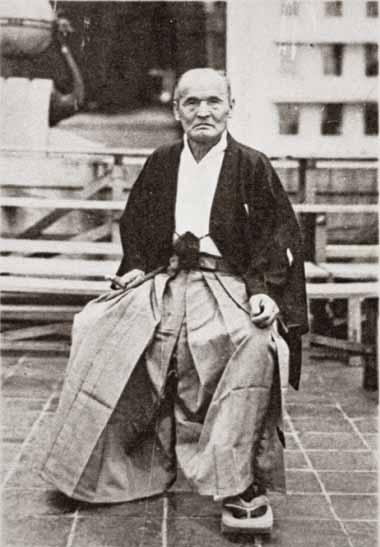 Takeda Sokaku was born the second son of Takeda Sokichi on 10 October 1859 in the Takeda mansion within the precincts of Aizu Ise Shrine in Oike. As a child, Sokaku witnessed first-hand the battles of the Aizu War, many of which took place within walking distance from his home. He learned kenjutsu, bojutsu, sumo, and Daito-ryu from his father. He also learned Ono-ha Itto-ryu from Shibuya Toma at the Yokikan dojo, which was located in the Bangemachi district of the Aizu domain. In 1873, together with his father Sokichi, he visited the Jikishinkage-ryu dojo of Sakakibara Kenkichi with whom Sokichi had good relationship. Sokaku became a live-in student at the Sakakibara dojo, studying the depths of Jikishinkage-ryu.
Sokaku's stay in Tokyo was cut short by the sudden death of his older brother Sokatsu in 1876. Sokatsu had entered the priesthood and, with his unexpected passing, Sokichi determined that his second son, Sokaku, would succeed him, an arrangement that he felt would give Sokaku a more respectable vocation. Consequently, the seventeen-year-old Sokaku was sent to Tsutsukowake Shrine in Fukushima prefecture (the Aizu domain had ceased to exist by that time). The chief priest there was Hoshina Chikanori (1830-1903), formerly known as Saigo Tanomo and a one-time Aizu domain councilor. Hoshina was sympathetic to the cause of Saigo Takamori (1828-1877), a key figure in the Meiji Restoration, who now found himself at odds with the Imperial government he had helped to create. It would appear that Hoshina briefed Sokaku on the political and military situation in the country and, in particular, on Takamori's activities in Kagoshima. At that time, rumors of Takamori's rebellion buzzed in Sokaku's ear and after a short stay of only a few weeks at the shrine as an apprentice priest, he abandoned his duties and set out for Kyushu with the intention of joining Takamori's army.
Sokaku made his way towards Kyushu via Tokyo and then Osaka where he spent a period of time training at the Kyoshin Meichi-ryu kenjutsu dojo of noted swordsman Momonoi Shunzo (1826-1886). Objections from those around him and other events eventually conspired to prevent Sokaku from joining Takamori's army, and he finally abandoned his plan. Nonetheless, he did not return home but instead spent the next ten or so years traveling around the southern part of Japan engaged in self-training. There are no known documents from this period of Sokaku's life, but various accounts of his training and adventures were left by his son Tokimune.
Likewise, few details are available on Sokaku's activities following his period of wandering in southern Japan. It is known that he spent some time in his native Fukushima prefecture, during which time he married and fathered two children. He also accompanied Saigo Tsugumichi (1843-1902), a younger brother of Saigo Takamori, to Hokkaido about 1887, when Tsugumichi became the head of the Hokkaido Development Project. It seems likely that Sokaku continued his training in the martial arts during this period extending into the 1890s and may have begun his teaching activities as well.
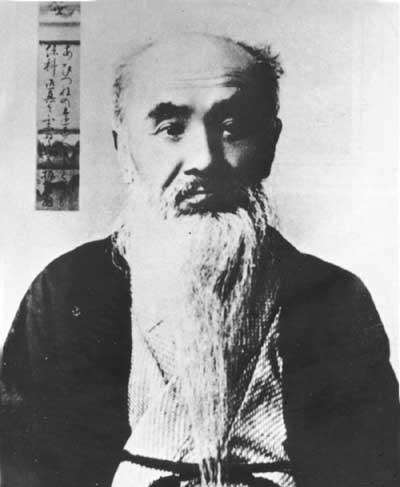 Sokaku trained in Daito-ryu under his father Sokichi. As for oshikiuchi he learned it for the first time from Hoshina Chikanori while studying under his mentorship at Tsutsukowake Shrine as an apprentice priest in 1876. In later years Sokaku would visit Hoshina often, including in 1898 when he spent some time at Ryozen Shrine in Fukushima prefecture, used as a dojo for esoteric practices by the Tendai Buddhist sect. There, under the supervision of Hoshina, Sokaku is said to have mastered the arts of divining time and space, the Mind's Eye and other magical powers, as well as the deepest secrets of oshikiuchi. On 12 May of the same year Sokaku received a poem from Hoshina:
People, do they know?
Though you may strike the flow of a river
no mark is left on the water
This is thought to have signified the formal transmission of Daito-ryu to Sokaku. Since that time Sokaku referred to himself as a practitioner of Daito-ryu Aikijujutsu and Ono-ha Itto-ryu swordsmanship. He began traveling around Japan teaching these martial arts and is revered as the "interim reviver" of Daito-ryu.
It is possible to trace Sokaku's whereabouts over a span of approximately fifty years with pinpoint accuracy beginning from 1892. This is due to the fact that of most of his personal enrollment books (Eimeiroku) and payment ledgers (Shareiroku), in which he had recorded detailed information on his teaching activities, have been preserved. These books contain the names and addresses of students, techniques taught, amounts paid, and other relevant information.
In 1910, Sokaku accompanied Akita prefectural police chief Takarabe Sanehide to Hokkaido upon the latter's transfer to Japan's underdeveloped northernmost island. Sokaku decided to settle in Hokkaido and there he remarried. Hokkaido would remain the site of his official residence for the rest of his life. After finishing his assignment with Takarabe, Sokaku began traveling around Hokkaido teaching Daito-ryu in various locations. Later, on the invitation of his student Ueshiba Morihei, Sokaku moved to a new dwelling in the Hokkaido town of Shirataki, where he lived with his wife Sue. This union produced seven children including Sokaku's successor Tokimune.
With the exception of the years of 1921 and 1922, Sokaku seldom ventured outside Hokkaido until the mid-1930s. Starting in 1934 he shifted his activities to the Tohoku, Kanto, and Kansai areas. While in Kanto he was often assisted during his instructional tours by Sagawa Yukiyoshi (1902-1998). Then in 1936, Sokaku appeared at the office of the Osaka Asahi News, announcing himself as "the martial arts teacher of Ueshiba Morihei." The specifics of this episode are surrounded in controversy, and it is unclear why Sokaku showed up so unexpectedly and took over instruction at the dojo where Morihei had been teaching since about 1933. In any event, during the following two years and eight months Sokaku often visited Osaka and taught Daito-ryu, eventually awarding menkyo kaiden (license of full transmission) certificates to both Hisa Takuma (1895-1980) and Tonedate Masao in 1939.
Sokaku spent most of the last years of his life in Hokkaido. Despite his advanced age he continued teaching until finally passing away at age eighty-four, on 25 April 1943 in Aomori prefecture during one of his usual instruction tours.
Takeda Sokaku mastered many different martial arts during his life, including sword, Daito-ryu Aikijujutsu, spear, staff, stick, shuriken, and others. He held the highest certificate (inka) awarded in Takada-ha Hozoin-ryu spear and menkyo kaiden in Ono-ha Itto-ryu swordsmanship. In his youth, he visited numerous dojo throughout Japan polishing his skills. He also engaged in personal training austerities, secluding himself in Udo Myojin Shrine in Kyushu, Futarasan Shrine in Nikko, Hagurosan Shrine in Yamagata prefecture and other places, always striving to temper his body and spirit. Sokaku's sword skills were extraordinary and fearsome to the degree that he was called "the little demon of Aizu." He was less than 150 centimeters tall, but is said to have had piercing eyes, skills that reached a level that seemed almost divine, and an ability to know a person's past, present and future even before meeting him. During his lifetime he taught about 30,000 students, including many famous martial artists (among them the swordsman Shimoe Hidetaro, aikido founder Ueshiba Morihei), as well as a wide array of politicians, military officers, judges, policemen, and other persons of high social standing from all over Japan.
http://www.daito-ryu.org/history2_eng.html
Εγγραφή σε:
Αναρτήσεις (Atom)
