Εμφάνιση αναρτήσεων με ετικέτα Self Defence. Εμφάνιση όλων των αναρτήσεων

Κυριακή 1 Δεκεμβρίου 2019

Block

Jodan/Age uke (high block)


Uchi uke (inside block)


All blocks

Τετάρτη 27 Νοεμβρίου 2019

Leg weapon

Yoko geri (side kick)


Kansetsu geri (kick to the knee)


Mae geri age (front upper kick)


Mae geri Chudan/Jodan (front upper kick middle/upper body)


Mawashi seashi geri (roundhouse kick)


Kinteki-seashi (testicles kick with the instep)


Ushiro geri (back kick)


 Ushiro mawashi geri (back kick)


Kakato geri (heel kick)


Hiza geri (knee kick)


Τρίτη 26 Νοεμβρίου 2019

Hand weapon


Seiken (normal fist)


Uraken (back fist)


Tegatana (handsword)


Segatana (reverse handsword)
 Nugite (piercing hand)

 Ippon Nugite (one-finger piercing hand)


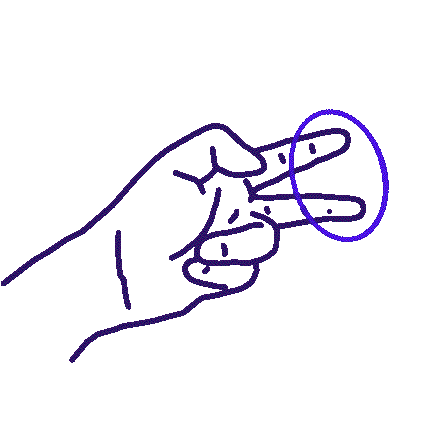
Nihon Nugite (two-finger piercing hand) 

 Keiko (chicken beak fist)
 Hitosashiyubi-ippon-ken (forefinger fist)

Nakayubi-ippon-ken (middlefinger fist)

Tettsui (iron hummer fist)

Shotei (palm heel thrust)


Toho (sword peak hand)

Heiken (flat fist)

Koken (arc fist)
 Hiji (elbow)

 Kote (forearm)


Τρίτη 25 Οκτωβρίου 2016

Ατέμι Ουάζα, μια άλλη προσέγγιση

Πηγή:  http://www.polemikes-tehnes.gr/articles/286/Ατέμι-Ουάζα,-μια-άλλη-προσέγγιση


O όρος ατέμι-ουάζα αποτελείται από τις λέξεις άτε που σημαίνει κτύπημα μι που σημαίνει σώμα και ουάζα που σημαίνει τεχνικές.Δηλαδή υποδηλώνει τις τεχνικές εκείνες με τις οποίες επιφέρουμε κτύπημα στο σώμα του αντιπάλου.

Στις παραδοσιακές ιαπωνικές πολεμικές τέχνες θα παρατηρήσουμε ότι δίδεται μεγαλύτερη έμφαση στις λαβες και λιγότερη έμφαση στα κτυπήματα.
Αυτό οφείλεται για δυο κυρίως λόγους. Πρώτον διότι σε μια αντιπαράθεση οι αντίπαλοι φέρουν όπλα και ως εκ τούτου τα «κτυπήματα » είναι με τα όπλα και όχι με τα χέρια η τα πόδια και δεύτερον διότι όταν λόγω απόστασης η χρήση των όπλων καθίσταται δύσκολη πρωταρχικός σκοπός του πολεμιστή ήταν να ρίξει τον αντίπαλο στο έδαφος και έτσι να τον ελέγξει με να τον δέσει (χομπάκου) η να τον αποτελειώσει .
Το Γιορόι κούμι-ούτσι ήταν ακριβώς η μέθοδος με την οποία πολεμιστές που φορούσαν πανοπλία όταν ερχόντουσαν σε κοντινή απόσταση με τον αντίπαλο χρησιμοποιούσαν τεχνικές να ρίξουν τον αντίπαλο στο έδαφος καθότι οι τεχνικές ατέμι ήταν αναποτελεσματικές εναντίον σε κάποιον που φορούσε πανοπλία.
Το Γιορόι κούμι-ούτσι είναι ο πρόγονος του Ζίου Ζίτσου.

Οι τεχνικές ατέμι άρχισαν να χρησιμοποιούνται πιο πολύ την περίοδο Έντο (1603-1868) όταν οι πανοπλίες έπαψαν να χρησιμοποιούνται και οι μέθοδοι αποκαλούνται Χέιφουκου κούμι-ούτσι, που αναφέρονται σε τεχνικές όταν οι αντίπαλοι δεν φορούσαν πανοπλία.
Και εκεί όμως τα ατέμι έχουν δευτερεύουσα σημασία διότι οι πολεμιστές ήταν σπάνια άοπλοι και ως εκ τούτου προτεραιότητα όταν κάποιος αντιμετώπιζε κάποιο αντίπαλο που είχε σπαθί ήταν να τον αποτρέψει από το να μπορέσει να το τραβήξει.

Την περίοδο Έντο ορισμένες σχολές Ζίου Ζίτσου χρησιμοποίησαν μικρά όπλα για να κάνουν τις τεχνικές ατέμι πιο αποτελεσματικές. Τα όπλα αυτά αποκαλούνται κομπούκι(μικρά όπλα), κακουσιμπούκι( κρυφά όπλα ) η χιμπούκι(μυστικά όπλα).

Είναι γεγονός ότι τα ατέμι-ουάζα είναι στενά συνυφασμένα με τα κιούσο δηλαδή τα ανατομικά ευαίσθητα σημεία του ανθρωπίνου σώματος. Παρόλο ότι τα ευαίσθητα σημεία του ανθρωπίνου σώματος είναι δεδομένα η κάθε σχολή εστιάζεται σε αυτά τα οποία θεωρεί πιο αποτελεσματικά η πιο χρήσιμα για συγκεκριμένες τεχνικές η και καταστάσεις που πιθανόν να χρησιμοποιηθούν. Συνήθως τελικός στόχος είναι να τεθεί ο αντίπαλος εκτός μάχης και έτσι να μην αποτελεί κίνδυνο για τον αμυνόμενο. Στην σύγχρονη εποχή η θεώρηση αυτή παρόλο ότι είναι πρακτικά αποτελεσματική εγκυμονεί κινδύνους για τον αμυνόμενο, αν ο επιτιθέμενος τραυματιστεί σοβαρά γεγονός που θα έχει νομικές συνέπειες για τον αμυνόμενο.

Γεννάται λοιπόν το ερώτημα αν υπάρχουν κιούσο τα οποία είναι αποτελεσματικά αλλά και συγχρόνως μειώνουν τους κίνδυνους να τραυματιστεί υπέρ το δέον ο επιτιθέμενος.

Στον Κινεζικό βελονισμό κατά μήκος των μεσημβρινών έχουμε σημεία τα οποία πέραν από σημεία θεραπείας μπορεί να χρησιμεύσουν και σαν σημεία για εφαρμογή στην αυτοάμυνα. Επίσης το ιαπωνικό σιάτσου που βασίζεται στην ίδια θεωρία των μεσημβρινών (κιράκου) έχουνε τα ευαίσθητα σημεία τσούμπο τα οποία πέραν των θεραπευτικών ιδιοτήτων τους χρησιμεύουν και σαν σημεία πιέσεων για λόγους αυτοάμυνας.

Τα ατέμι-ουάζα που ακολουθούν αυτή την προσέγγιση δεν είναι τόσο κτυπήματα όσο πιέσεις στα συγκεκριμένα σημεία και επειδή δεν έχουν σαν στόχο να τραυματίσουν σοβαρά τον αντίπαλο θεωρούνται σαν «μαλακά» ατέμι. Την ανωτέρω θεώρηση ως προς τα ατέμι-ουάζα ακολουθεί και το Χάκκο Ρίου Ζίου Ζίτσου του Οκουγιάμα Ριούχο.

Ανάλογη προσέγγιση συναντάμε και στις μοντέρνες «πολεμικές τέχνες » της Δύσης.
Οι τακτικές ελέγχου με πίεση σημείων (pressure point control tactics η PPCT ) είναι μια μέθοδος που χρησιμοποιείται από αστυνομικές δυνάμεις ορισμένων χωρών στα πλαίσια των αμυντικών τακτικών τους, που έχουν σαν στόχο να ελέγξουν αυτόν που πρέπει να συλλάβουν ,εφόσον αντιστέκεται, χωρίς να τον τραυματίσουν σοβαρά.

Τα σημεία χωρίζονται σε δυο κατηγορίες . Η πρώτη κατηγορία αφορά τα σημεία πίεσης νεύρων του λαιμού και του κεφαλιού, αυτά είναι σημεία πλησίον της επιφάνειας του δέρματος και χρησιμοποιούνται για να ελέγξουν τον αντίπαλο μέσω του πόνου (pain compliance).

Η δεύτερη κατηγορία αφορά σημεία που αποκαλούνται νεύρα « μηχανικών σημείων» ( nerve “motor points” ). Αυτά τα σημεία χρησιμοποιούνται σαν σημεία κτυπήματος με κλομπ όπου ο τραυματισμός περιορίζεται στην μυϊκή μάζα του σημείου. Συγχρόνως όμως υπάρχει αδυναμία χρήσης του μέλους που κτυπήθηκε για 30 δευτερόλεπτα έως μερικά λεπτά.

Όπως στο Ζίου Ζίτσου της περιόδου Έντο χρησιμοποιούσαν μικρά όπλα για να γίνουν πιο αποτελεσματικά τα ατέμι έτσι και στην σύγχρονη εποχή έχουμε «όπλα» που είναι νόμιμα και επιτρέπουν να κάνουμε τα «μαλακά» ατέμι πιο αποτελεσματικά πετυχαίνοντας πολύ καλύτερη διείσδυση στα σημεία των νεύρων από ότι θα μπορούσαμε να πετύχουμε με γυμνά χέρια.

Ένα τέτοιο «όπλο» είναι και το Κούμποταν(φωτογραφία του άρθρου) που έκανε δημοφιλές ο δάσκαλος του καράτε Τακαγιούκι Κουμπότα παρόλο ότι προέρχεται από το σουντέτσου το οποίο ήταν ιδανικό για ατέμι-ουάζα. To σουντέτσου ήταν ένα από τα κρυφά όπλα, η μυστικά όπλα του Ιαπωνικού Ζίου Ζίτσου της περιόδου Έντο.
Το “κούμποταν” αποκαλείται και «ράβδος πειθούς» persuador baton.

Πιστεύω ότι όσοι ασχολούνται με τις πολεμικές τέχνες η την αυτοάμυνα θα πρέπει να εξετάσουν και την εξάσκηση στο “ κούμποταν ” σαν μια προσθήκη στις τεχνικές αυτοάμυνας που ήδη εξασκούν ,που μπορεί να βοηθήσει στην αυτοάμυνα και στον έλεγχο του αντιπάλου χωρίς να τον τραυματίσει.

Μιχαήλ Δ. Πετρόπουλος

Βιβλιογραφία

1) Classical fighting arts of Japan (a complete guide to koryu Jujutsu) του Serge Mol εκδόσεις Kodansha
2) Defensive Tactics student manual εκδόσεις PPCT management Systems,Inc.
3) Official Kubotan Techniques του Takayuki Kubota και John Peters , Jr.εκδόσεις Kubotan Institute.
4) Tactical edge του Charles Remsberg εκδόσεις Calibre press.

Κυριακή 28 Αυγούστου 2011

Kyūsho, Pressure point

A pressure point (Japanese: kyūsho 急所 "vital point, tender spot"; Chinese: 穴位; Malayalam marmam) in the field of martial arts refers to an area on the human body that may produce significant pain or other effects when manipulated in a specific manner. Techniques of attacks on pressure points are called Hyol Do Bup (Hangul: 혈도법; 穴道法) in Korean martial arts and kyūsho-jutsu (Japanese: きゅうしょじゅつ) in various styles of Japanese martial arts.

The concept of pressure points is present in old school (17th century) Japanese martial arts and is claimed to have an even earlier history; in a 1942 article in the Shin Budo magazine, Takuma Hisa Sensei asserted the existence of a tradition attributing the first development of pressure-point attacks to Shinra Saburō Minamoto no Yoshimitsu (1045–1127).

Hancock and Higashi (1905) published a book which pointed out a number of vital points in Japanese martial arts.

Exaggerated accounts of pressure-point fighting appeared in Chinese Wuxia fiction and became known by the name of Dim Mak, or "Death Touch", in western popular culture in the 1960s. One of the best-known uses of pressure-point fighting is known to Trekkies as the "Vulcan nerve pinch."

While it is undisputed that there are sensitive points on the human body where even comparatively weak pressure may induce significant pain or serious injury, the association of kyūsho with esotericist notions of qi, acupuncture, or reflexology is controversial.

There are several types of pressure points - each is applied differently and each creates a different effect. "Pain points", for example, use tendons, ligaments, and muscles - the goal is to temporarily immobilize the target, or, at the very least, to distract them. Reflex points produce involuntary movements; for example, causing the hand to release its grip, the knees to buckle, the target to gag, or even for the person to be knocked unconscious. Most pressure points are located on pathways on the nervous system.

Pain

Some pressure points produce pain when struck, pressed, or rubbed, depending on the point itself. These points are also referred to as nerve centers. While the distraction of pain might offer sufficient advantage in a fight or escape, the body also has a pain withdrawal reflex, whereby it reacts to pain by moving away from the source.[6] Martial artists can make use of this reflex with minimal effort.

Blood and blood pressure

The baroreceptors in the carotid artery are pressure-sensitive, supplying the brain with information to control systemic blood pressure. Pressure against this region will send signals that indicate that blood pressure is too high, leading to a lowering of blood pressure.[7] Thus, striking this area can cause unconsciousness, both using the same mechanism and relying on the force being transmitted to the reticular activating system.

Break

There are certain areas which are likely to lead to a break if struck properly, such as the "floating ribs", the philtrum, and the side of the knee.

Hyper-extension

There are joints that, when struck, can be hyper-extended and even tear. The striking of these joints is a technique which can cause permanent damage to one's opponent. There are two types, as follows:

  • Brute force, which, when applied, takes advantage of the vulnerability of the strike point, usually a joint, thereby causing damage.
  • Golgi organ strike, a relatively gentle strike to the Golgi tendon at the back of the elbow, which triggers a reflex that immediately relaxes the tendon, allowing the elbow to bend more easily in the wrong direction. If this is directly followed by a solid strike to the elbow joint, them the elbow can be broken with significantly less effort than it could through brute force.
Concussion

The brain is a sensitive organ which floats in a fluid (cerebrospinal fluid). The fluid itself is a safety mechanism that allows the head to take substantial impact without resulting in concussion, although such an impact could still cause permanent brain damage. However, it is possible to deliver a blow using artful techniques in such a way that even these protections can be effectively eliminated, causing disorientation or instantaneous knockout. The most commonly taught technique involves a strike just below the occipital ridge, at the correct angle, in the correct direction. Another well-known point with this effect is the chin or lower jaw, giving rise to the boxing expression a "glass jaw".[9] The same effect of knocking somebody unconscious may be achieved by using the edge of the hand, palm-up, to apply a sharp strike to the carotid artery.

Energy

Some fighter artists believe that there are energy channels (acupuncture meridians) which allow Qi, or "life-force", to flow through the body. Acupuncture, for example, is well-known among the pseudosciences that use the meridian system. Traditional Chinese medicine practices in general are largely based on the belief that meridians are specific pathway lines in the human body, along which are found many hundreds of acupressure points. According to this belief, attacks can be used to impact the flow of Qi, and, thus, the body. Therefore, pressing, seizing, or striking these points with specific intent and at certain angles is believed to cause either a heightening or a diminishing of Qi circulation in the body. However, despite many attempts using placebo-controlled doubled-blinded experiments to find these points, these so-called meridians have never been located or proven scientifically, pointing to the conclusion that they may not exist at all.

http://en.wikipedia.org/wiki/Pressure_point